
By Walt Barron: A close, personal friend to Rocky Top Insider, Barron is a lifelong Vol fan who will travel when he can but mostly cheers for the Big Orange from his home in Durham, NC. Barron also writes personal stories about the Vols and all things sports on his Substack, Sportingly Yours.
Vol fans, it’s time for our favorite annual ritual: watching another team’s player win The Heisman Trophy.
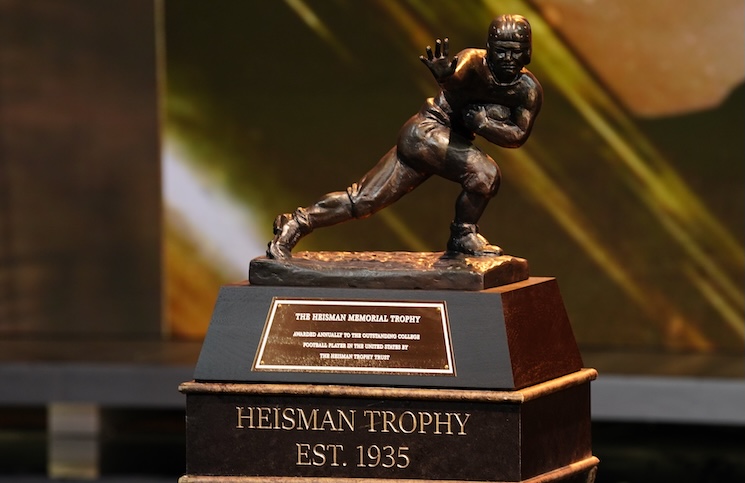
For the uninitiated, the Downtown Athletic Club of New York has hosted the annual trophy presentation since 1935 to honor the nation’s “most outstanding college football player.” Named after a former Club member who played football at powerhouse programs Brown and Penn, the voters of the award (870 media members, 57 former Heisman winners and one single fan) pick their top three nominees: a first-place vote gets three points, second-place gets two, and third-place gets one. The player with the most points wins.
Here are the requirements to be considered for this award:
- You are good at football
- You play for a prominent Power Five program
- You play quarterback…
- OR you play running back or wide receiver for a team with red colors…
- OR you’re an athletic Cornerback who also played at least a few snaps at Wide Receiver AND/OR have a famous coach
- You are handsome, charming, or otherwise very marketable when it comes to promoting Japanese vehicles and Midwestern insurance companies
- You may or may not become a good, or average, or below average NFL player – that’s irrelevant
- You have an excellent PR team
- Someone who played at your school previously won a Heisman award
- You don’t play for the University of Tennessee
It is a very prestigious honor, as all finalists must wear a nice suit to the final ceremony in New York City. If you don’t win, you must smile and clap and give the winner a bro hug as a TV camera is shoved in your face. If you win, you must get misty eyed as you say that you’re accepting the award on behalf of all of your other teammates, coaches, support staff, parents, grandparents, high school coach and God, who clearly is happy that you won and not all those other losers.
It truly is the most righteous and just award ever given, as determining the single most outstanding player in football – as in other individual sports such as swimming, golf, and track and field – is obvious, objective, and proven by irrefutable data.
“But football is the ultimate team sport,” you may say. “No single player can accomplish anything without his teammates doing their part, and elevating one above all others undermines what makes this sport so special.” Okay, smarty pants – you make a good point. But how else would we get something as wonderful as the Nissan Heisman House marketing campaign?
Why do Vol fans love the Heisman Award so much? Maybe it’s because our beloved Vols have won a whopping (checks notes) zero of them. We had a great chance in 1956 when UT legend Johnny Majors passed, ran, and returned kicks for gobs of touchdowns. But in the final voting he fell just short of winner Paul Hornung. Naysayers will point out that Majors’ stats (12 touchdowns, 61% completion rate) were far better than Hornung’s (13 interceptions and just three touchdowns). Or that Majors also returned kicks, was the team’s punter, and played safety. Or that Majors was the best player on the best team in college football (a 10-0 record), while Hornung’s team was one of the worst (a 2-8 record). But Hornung more than made up for it by doing something REALLY outstanding: he played for Notre Dame.
Vol Nation had another good chance at a Heisman winner in 1997, when some guy named Peyton Manning (who you might recognize from every ad campaign the last 28 years except for Nissan’s Heisman House) completed a pretty dang good college career and won the Maxwell and Johnny Unitas awards for the best college quarterback. But in a surprise ending, Michigan cornerback Charles Woodson won the award partly because he’s really good at football and partly because he didn’t play for Tennessee.
Anyone claiming that the voters in both the 1956 and 1997 contests were motivated to not select a UT player are dead wrong. It’s just pure coincidence that Hornung is the only Heisman winner to play for a losing team, and that Woodson was the first to win as a primarily defensive player. So what if 110 voters in 1997 completely left Manning off the ballot? Woodson caught a whopping TWO touchdowns as a wide receiver that season, far more outstanding than the mere 36 touchdowns that Manning threw. If that’s not irrefutable, I don’t know what is.
If you’re gonna come at me with more Heisman hate, you better bring it. Because I’ve heard all the arguments.
“How can you compare the accomplishments of players who play completely different positions with completely different roles, skills and stats?”
“How can you judge them if they didn’t play against each other and didn’t even play any common opponents?”
“Shouldn’t we just celebrate the accomplishments of the team versus those of a single individual?”
Well, people who say this stuff just don’t get it. They’re trying to apply logic to something too outstanding for that. If they want to truly get the most out of this upcoming Heisman event, they should focus on these three metrics:
- Does the College GameDay crew talk about a player all the time?
- Do they have nice hair?
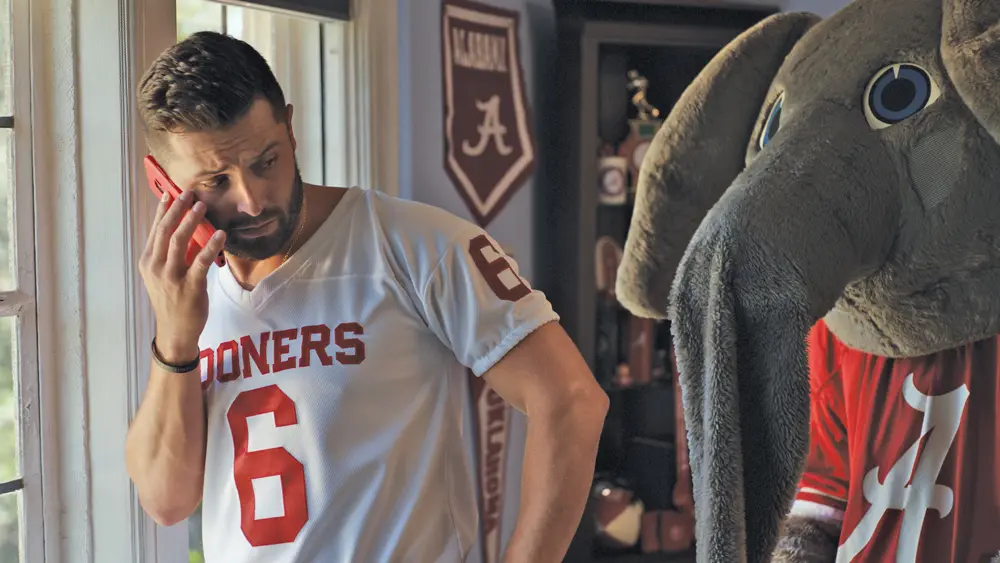
- Would they look good on a screen with Baker Mayfield and Mark Ingram?
If the answer to all three is yes, then they just might get a chance to travel to New York, don a nice suit, and audition for a gig in the next Nissan Heisman House campaign.
Unless they play for the Vols, of course.