

This season’s Final Four in Indianapolis was ripe with teams playing a similar brand of basketball as Tennessee did last season. Michigan, Arizona and Illinois boasted massive front lines and dominated the paint and the glass.
The Vols’ often maligned roster from a season ago was built to play a similar way. Tennessee simply did not get the front court production that they anticipated they would and did not have the shooting to overcome it.
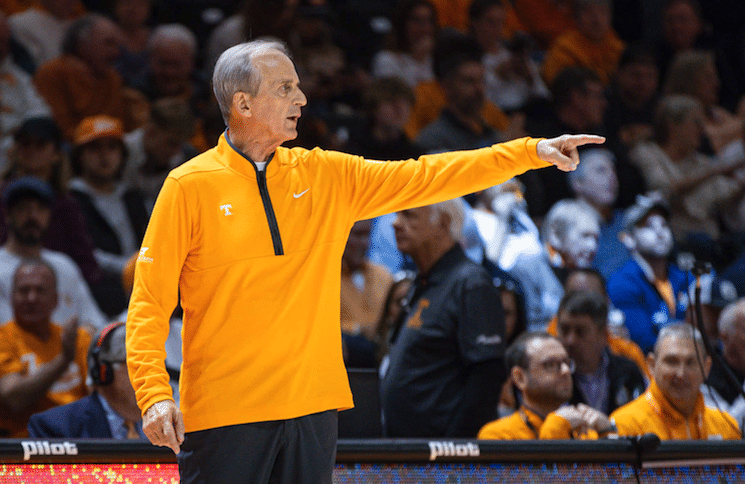
Thirty days after Michigan claimed the Big 10’s first national championship since 2000, the Vols’ roster is almost set for next season. Tennessee’s terrific transfer haul shows that Rick Barnes and his staff are going against the grain and building a much different roster than they did last season.
Predictably, power five teams across the country are flocking to copy the roster build that delivered Michigan a national title last season and, to a lesser extent, delivered Florida a national championship two seasons ago.
The desire to build massive front courts and the lack of skilled big men available has led to the front court market booming in the transfer portal.
More From RTI: Why VFL Ron Slay Isn’t Worried About Potential Narrative Surrounding Tennessee Basketball’s New Roster
Using data from his “Front Office Suite” that approximately 30 college basketball programs use, Evan Miyakawa estimates that centers are costing about 30% over market value and that a center cost approximately 60% more than a point guard of similar caliber.
And Tennessee, who is reportedly one of the biggest spenders in college basketball, is targeting the value positions instead and stacking up on top-level guards and wings.
The Vols retained rising sophomore center DeWayne Brown after a promising freshman season, but let J.P. Estrella, Jaylen Carey and Cade Phillips walk this offseason. All three landed in either the Big 10 or SEC.
Barnes and his staff did their due diligence with some top big men in the portal but decided against wading into those waters. Tennessee’s most notable front court addition was Loyola (Chicago) center Miles Rubin. The 6-foot-10 center ranked in the top 20 nationally in block percentage each of his three seasons at Loyola, but had yet to prove his prowess in a power five conference is limited offensively.
The Vols then beat out UAB and Memphis for Kennesaw State power forward Braedan Lue. Tennessee hosted four-star prep center Favour Ibe on a visit last week and is still looking to add more interior size. But Tennessee has not paid the premium for elite big men this offseason.
Tennessee more or less bargain hunted inside. They’re projecting a breakout sophomore season for Brown and Rubin faring just fine in his jump to the SEC. They’re also banking on interior health.
But make no bones about it, Tennessee is not some small market Moneyball team. They simply used their money reservoir on building one of the nation’s best backcourts. Tennessee landed five perimeter players who rank in the top 75 of The Athletic’s transfer portal rankings. No other team landed that many players in the top 75, let alone perimeter players.
More From RTI: Projecting Tennessee Basketball’s Starting Lineup After Monster Portal Haul
Wake Forest guard Juke Harris is one of the top players in the transfer portal. Combo guards Terrence Hill Jr. (VCU) and Dai Dai Ames (Cal) give Tennessee a lethal ball handling duo. Belmont wing Tyler Lundblade is one of the best shooters in the country and does not need to play with the ball in his hands to be effective. Notre Dame wing Jalen Haralson is the most interesting fit because of his lack of perimeter shooting and high usage rate, but he’s a versatile and fascinating piece of Tennessee’s roster.
Tennessee’s roster build creates multiple questions. Can the Vols protect the rim and rebound against teams with size like Florida and Texas? How will the backcourt pieces mesh together and fare when they’re not handling the ball?
In that sense, this move is a gamble by Barnes and his staff. Tennessee’s floor will not be quite as high as it’s been over the last half decade. But after three straight Elite Eight losses, Barnes is mixing things up and going all-in on offense while banking that he can get his team to buy-in on defense. That move dramatically raises Tennessee’s ceiling and makes them a national title contender if everything clicks.
That gamble, and Tennessee’s payroll, will be major talking points over the next year. But the Vols’ zigging where others zag by building a perimeter dominant roster will be the most compelling storyline to watch over next season.