
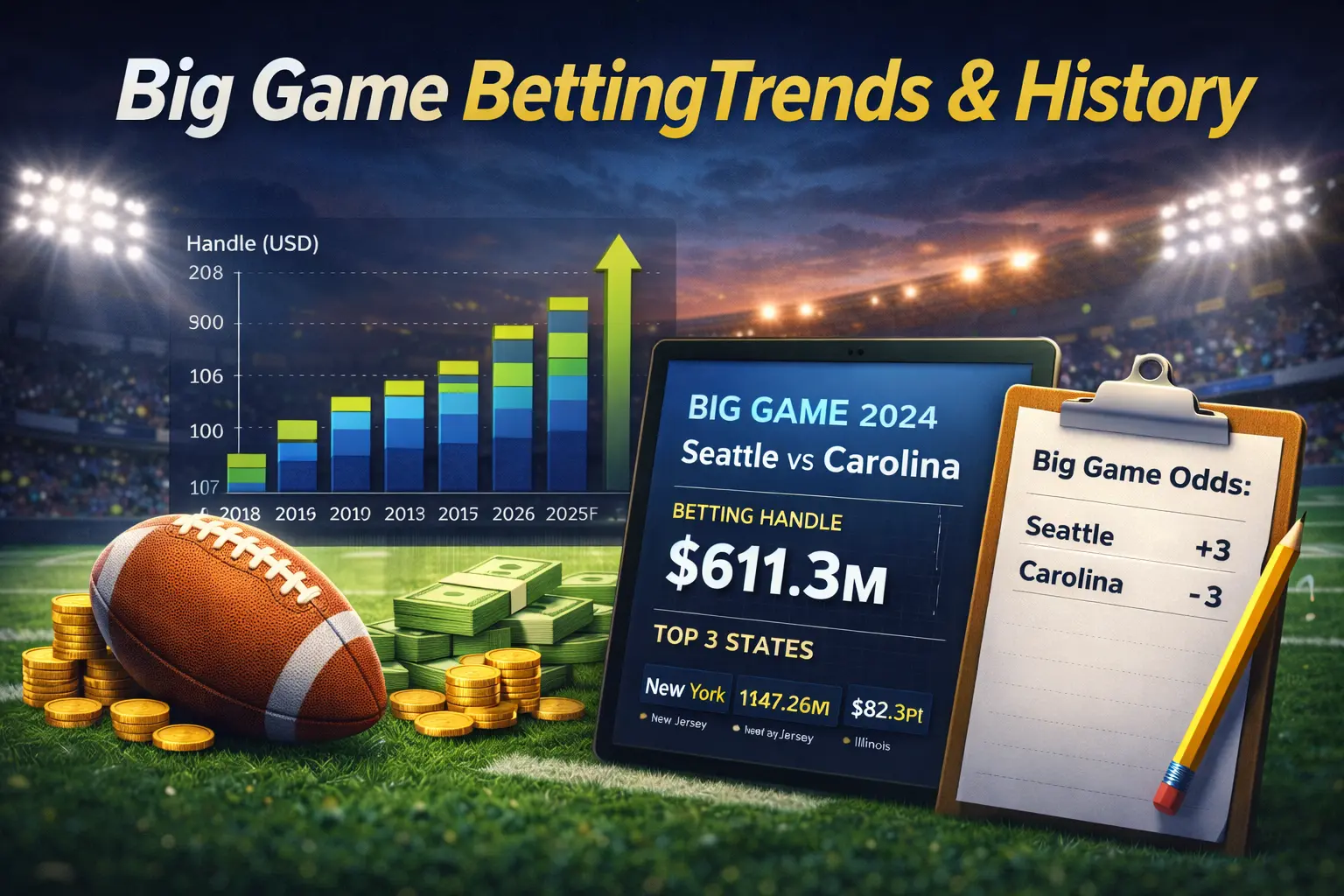
Big Game betting trends and history are a great way to add context to the biggest game of the year-but the key is knowing which trends are actually useful and which ones are just noise. Because the Big Game is a one-game sample with massive public betting influence, many historical patterns get repeated without considering why they happened (or whether they still apply in today’s NFL).
Below is a practical look at Big Game betting odds history, the trends bettors commonly track, and how to use them responsibly when evaluating Big Game 60 lines, props, and betting markets.
Why Big Game Betting Trends Matter
Big Game markets are the most heavily bet NFL lines of the season. That means:
- Odds are sharp and heavily analyzed
- Public money can still influence pricing
- Prop markets expand and sometimes misprice
- Betting volume creates more line movement than typical games
Trends are useful when they help you understand how the market behaves, not just what happened in past results.
A Brief History of Big GameBetting
In Tennessee, where online sports betting is fully legalized, Big Game wagering continues to surge as bettors use regulated Tennessee sports betting sites like FanDuel, DraftKings, Caesars, and BetMGM to access competitive odds, same-game parlays, and one of the deepest Big Game prop menus of the year.
The modern Big Game betting menu is also far larger than in the past. Where early markets focused on spreads and totals, today’s Big Game boards include:
- Hundreds of player props
- Alternative spreads/totals
- Same-game parlays
- Live betting markets that update every play
- Futures, MVP odds, and novelty props
Spread Trends: Favorites vs Underdogs
One of the most common Big Game trends bettors reference is how favorites and underdogs have performed against the spread (ATS). The reality is that ATS results have fluctuated across eras, and there hasn’t been a single consistent “always bet favorites” or “always bet dogs” rule that holds up indefinitely.
How to use this trend smartly:
Instead of blindly betting a side based on history, focus on:
- How much public money is on the favorite
- Whether the spread moved toward or away from the public side
- Matchup edges that influence game script (trenches, turnovers, pace)
Big Game often come down to a few high-leverage plays, which makes spreads especially sensitive to variance.
Total Trends: Overs vs Unders
Totals trends are another popular talking point. Some Big Game have been defensive, slower-paced games; others have turned into shootouts. Totals are influenced by:
- Tempo and play volume
- Red-zone efficiency (TDs vs FGs)
- Explosive-play capability
- Turnovers and short fields
- Coaching aggressiveness (4th-down decisions)
Practical takeaway:
Instead of only looking at over/under history, track pace indicators and expected possessions. Games with fewer drives are more likely to land under, while fast-paced games with aggressive coaches can push overs.
First-Half vs Full-Game Betting Trends
Many bettors prefer Big Game first-half betting because:
- Early scripts are more predictable
- Teams may play tighter early
- Halftime adjustments can dramatically change second-half scoring
First-half spreads and totals can also be less efficient than full-game lines, especially if public money piles into common narratives late in the week.
Big Game Prop Betting History
Prop betting has become one of the defining features of Big Game wagering. The sheer number of available props creates more opportunities-but also more ways to lose if bettors chase every angle.
Prop markets that often draw the most action:
- Anytime touchdown scorers
- QB passing yards and TDs
- Receiver receptions and yards
- MVP odds
- Kicker props (field goals made/longest FG)
Smart prop betting tip:
Player usage and role stability matter more than hype. Props tied to predictable volume-like targets, routes, and red-zone touches-tend to be more reliable than highly random outcomes.
The Public Betting Effect: A Big Game Trend That’s Real
One of the most consistent Big Game “trends” isn’t about winners-it’s about market behavior. The Big Game draws the largest casual betting audience of the year, which can create:
- Inflated prices on popular teams
- Higher juice on high-demand props
- Late-week line movement driven by public money
How to use this:
Line shop across sportsbooks. Even small price differences can be meaningful when betting into the most efficient market of the season.
What Trends Should You Avoid?
Some Big Game trends are repeated every year but have little predictive power, such as:
- Coin toss history
- “Big Game teams always start slow” blanket claims
- Trends based on jersey color or non-football variables
- Small-sample narratives without matchup support
These are fine for entertainment content, but they shouldn’t drive real wagering decisions.
How to Apply Big Game Trends to Big Game
If you’re betting Big Game, trends work best when used as a filter-not the foundation. A good approach is:
- Start with matchup analysis (trenches, QB pressure, pace)
- Check market movement (is the line moving with or against the public?)
- Use trends for context (do they align with how this game should play?)
- Shop numbers and compare prices before placing bets
Trends can support a bet, but they shouldn’t replace actual analysis.
Final Thoughts
Big Game betting trends and history are useful when they help you understand how markets behave and how certain game scripts tend to play out. But the best Big Game bets come from value-getting the right number, choosing the right market, and avoiding decisions based on outdated or meaningless patterns.
As Big Game approaches, the smartest bettors will combine history with real-time factors like injuries, pace, coaching tendencies, and line movement-then shop odds across sportsbooks to lock in the best price.