
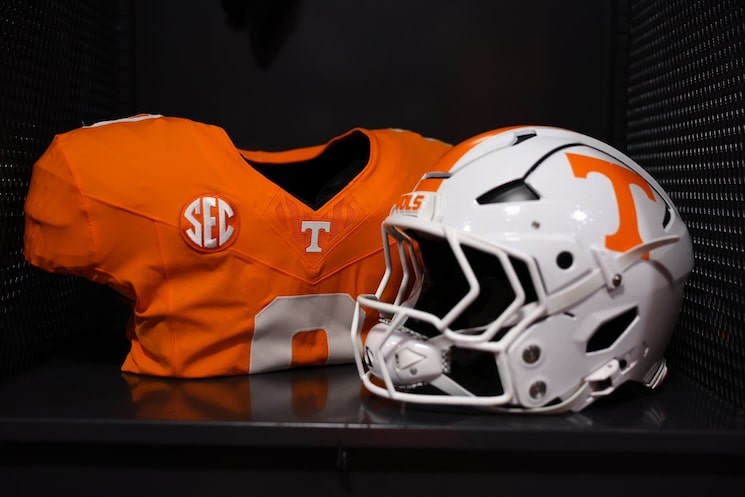
Tennessee football is making a notable change with its uniforms next season as it switches from Nike to adidas. However, that may not be the extent of changes.
On Friday, the NCAA DI Cabinet approved commercial patches for uniforms, equipment and apparel. This means that schools can now create additional revenue through advertisements on jerseys.
There are a few rules surrounding the addition of patches on uniforms, though. First off, it must be a non-NCAA championship competition, meaning the preseason and regular season. Division I teams may add up to two additional patches on uniforms and apparel, and one more on equipment, such as a helmet. The patches will be limited to a maximum of four square inches per logo. For conference championship games, an additional logo on uniforms and apparel will be allowed.
The expectation is that patches must be placed outside of designated sections of uniforms that are necessary for officiating purposes. The rule change will go into effect on August 1, 2026.
More From RTI: Former Vanderbilt, Miami Defensive Back Reportedly Visiting Tennessee Football
“College sports are in an exciting new era of increased financial benefits for student-athletes, and the Cabinet’s vote today reflects the ongoing commitment of Division I members to drive additional revenues and fully fund those benefits,” said Josh Whitman, athletics director at Illinois and chair of the Cabinet. “This also continues the NCAA’s efforts to expand flexibility in areas of NCAA rules, thereby allowing schools and conferences to set standards that reflect their values and serve their unique needs. This important policy change is another step forward in advancing that philosophy and providing members with increased flexibility.”
There is no indication at the moment whether Tennessee will take advantage of this advertising opportunity. However, if the university does, there’s one brand that would make a lot of sense.
In 2024, Tennessee and Pilot announced a partnership that featured the Knoxville-based company’s logo on the field and across Neyland Stadium. With generating revenue more important than ever in college athletics, it’s tough to imagine many schools turning this chance down.